Zumper · Real Estate
Zumper apartment rental website for NYC renters
Techcelerant built the Zumper rental website: apartment search with filters and a map, detailed listing pages, a city directory and online applications.
First published
Zumper is a rental marketplace that helps people find apartments, rooms and houses. Techcelerant refined the Zumper website for renters searching in New York City. The site pairs a large set of listings with clear search filters, a live map and real-time updates, so renters can spot a good apartment and act on it fast.
The client
Zumper connects renters with landlords and property managers across many cities in North America. Renters use it to search, compare and apply. Landlords use it to post vacancies and reach qualified renters. In a market like New York, apartments come and go quickly, and the website has to keep up with both sides.
The problem
Apartment hunting in New York is stressful. Good listings move fast, neighborhoods vary block by block, and renters often look at many places before they find one. A search that returns a long, unsorted list only adds to the stress.
Zumper needed a search experience that made a big inventory feel manageable. Renters had to narrow results quickly, see where each apartment sits on a map, and get enough detail on a listing page to decide whether to tour. The homepage also had to welcome first-time visitors and explain what Zumper offers to renters and landlords.
What we built
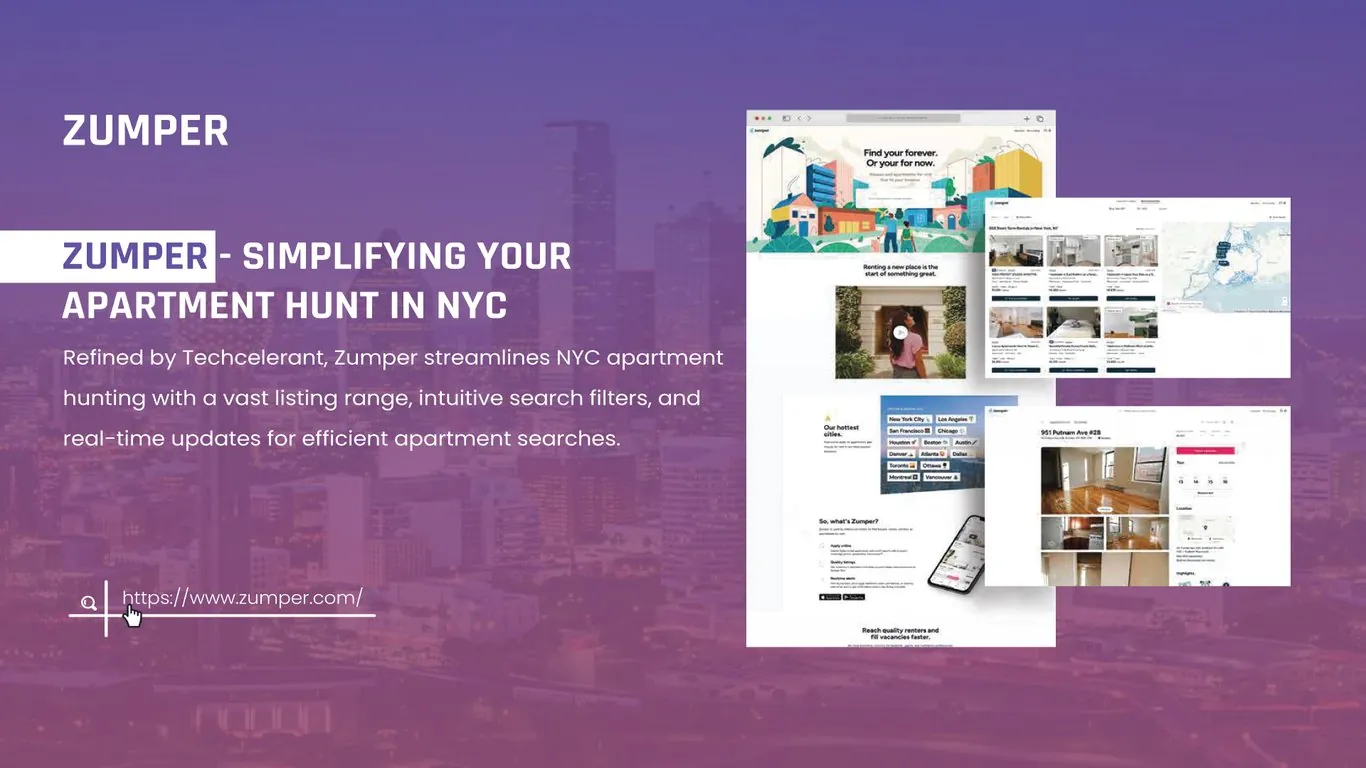
- An illustrated homepage hero, "Find your forever. Or your for now.," with a row of colorful buildings and a search bar for city, neighborhood or address.
- A short video block, "Renting a new place is the start of something great."
- An "Our hottest cities" directory with tiles for cities such as New York City, Los Angeles, Chicago, Boston and Toronto.
- A "So, what's Zumper?" section that explains online applications, quality listings and real-time alerts, next to a phone showing the app and links to the app stores.
- A landlord section, "Reach quality renters and fill vacancies faster," for property owners.
- A search results page, for example short-term rentals in New York, with filter controls at the top, listing cards with photos and prices, and a map of matching apartments on the right.
- Listing pages with a photo gallery, the address, a tour date picker, a location map and a highlights list.
- Real-time updates, so renters see new listings and changes as they happen.
Design decisions
The homepage illustration sets the tone. Bright buildings in yellow, blue, coral and green make apartment hunting feel friendly. It also tells a visitor at a glance that the site is about homes in the city. Below the hero, the site switches to white space and simple type so the listings carry the color.
On the search page, the list and the map share the screen. New York renters care about location as much as price, and seeing both at once saves them from opening listings in neighborhoods they would never choose. Each card shows a photo, the price, the address and a button to see more.
Listing pages put photos first, in a large main image with smaller shots beside it. The tour date picker sits on the right, near the top, so a renter who likes what they see can pick a time without scrolling. Location and highlights follow for renters who want to check the details.
The city directory uses small flags and plain labels. It is a quick way into another market for renters who are moving between cities.
Landlord content sits at the bottom of the homepage in its own band. Renters are the main audience, and landlords know to look for their own section.
The result
Zumper's website now makes a large New York inventory easy to search. Renters can filter results, compare listings on a map, view photos and book a tour from the listing page. New visitors learn what Zumper does from the homepage, and landlords have a clear path to post their vacancies. Real-time updates keep the listings current, which matters in a city where apartments do not stay on the market long.
For the thinking behind search pages like this, see our post on UX design principles.
Building a marketplace or search-heavy site? See our web design and development service or tell us about it.